
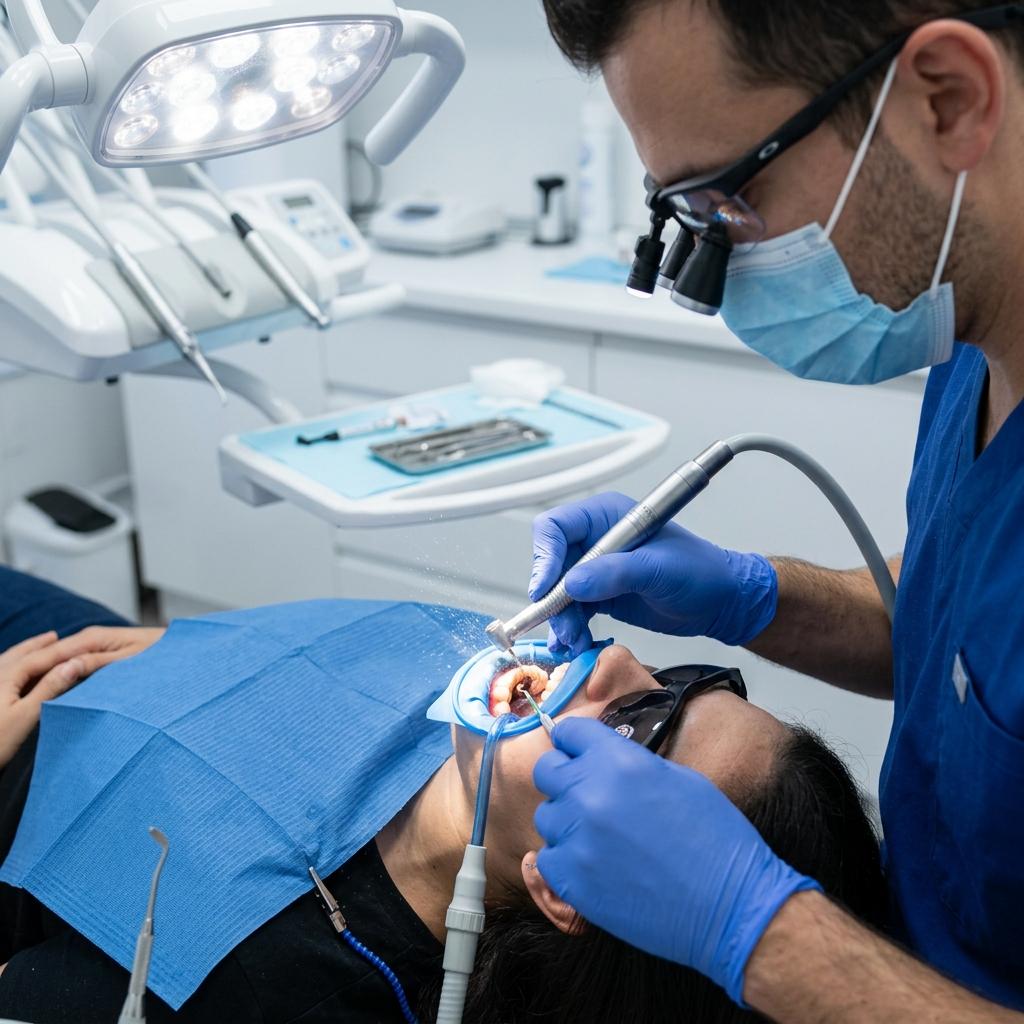
Root Canal Therapy
Saving an infected or severely decayed tooth by removing the damaged nerve.
What is it?
Root canal therapy (endodontic treatment) removes infected or damaged pulp tissue from inside the tooth's root canals, disinfects the canals, and seals them to prevent re-infection. The tooth is then restored with a crown for protection.
Why do you need it?
When bacteria reach the inner pulp - through deep decay, a crack, or trauma - the tooth becomes severely painful and may develop an abscess. Without treatment, the infection spreads and the tooth must be extracted. Root canal therapy saves the natural tooth and eliminates infection.
Who is it for?
Patients with a tooth that has deep decay reaching the nerve, persistent toothache, prolonged sensitivity to heat, facial swelling, a dental abscess, or a dead tooth following trauma.
Treatment Procedure
- 1Local anaesthesia - root canals performed with modern anaesthetics are no more uncomfortable than a filling.
- 2Rubber dam placed to isolate the tooth and maintain a sterile field.
- 3Access cavity created through the crown of the tooth.
- 4Root canals located, measured with an electronic apex locator, and shaped with rotary files.
- 5Canals irrigated with sodium hypochlorite to disinfect.
- 6Canals dried and filled with gutta-percha (a rubber-like material) and sealer.
- 7Temporary or permanent filling placed; crown usually recommended within four weeks.
Aftercare
- Some tenderness for 2-3 days is normal; take ibuprofen or paracetamol as directed.
- Avoid chewing hard foods on the treated tooth until the crown is placed.
- Complete any prescribed antibiotic course.
- Do not delay the crown appointment - an uncrowned root-canal tooth is prone to fracture.
- Maintain excellent oral hygiene around the restored tooth.
Diagnosis
Periapical X-rays, CBCT in complex cases, and pulp vitality tests confirm the diagnosis. Signs include deep caries visible on X-ray, periapical radiolucency (infection at the root tip), or clinical signs of irreversible pulpitis.
Prognosis
Root canal therapy has a success rate of 85-95%. A tooth that has had root canal treatment can last a lifetime if properly restored with a crown and maintained with good oral hygiene.
Ready to get started with Root Canal Therapy?
Book an appointment today and our specialists will guide you through every step.